Enriching lives through participation in music



Enriching lives through participation in music

On a recent vacation, one of our therapists visited a library with a number of special exhibits on display. One of the exhibits she happened to stumble upon explored historic perspectives about a disorder known then as “melancholy” – what we now would describe as depression or another related mood disorder. Rachel was delighted to find that in a work published in the year 1621, the author spoke extensively of the benefits of music in the treatment of melancholy and was amazed at how relevant some of the ideas were in the practice of music therapy today.
Robert Burton published “The Anatomy of Melancholy” to describe causes, symptoms, and remedies for people experiencing what he knew as “melancholy.” His remedies utilized a holistic approach by suggesting that not only were medicinal cures recommended, but also many different activities and external forces can enhance mood, including food and exercise, laughter, reading, friends, spiritual practices, and MUSIC.
Burton discussed the power that music possesses to provoke changes in mood, and he noted the benefits of both music listening and music participation. He recognized the role that music can play in building social connections that are important in the maintenance of holistic well-being.
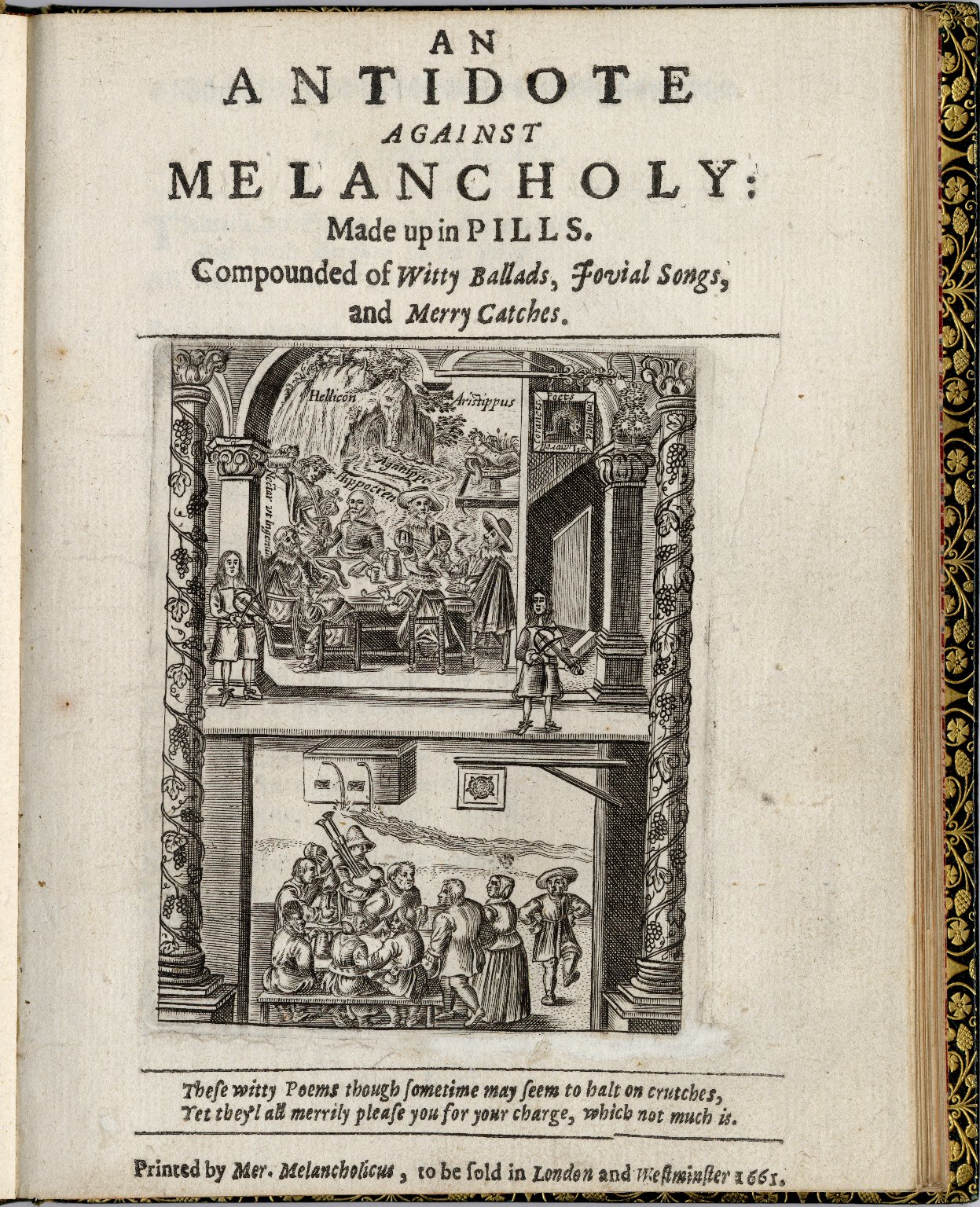
While in Burton’s day these perceived benefits were purely anecdotal, research today supports many of the positive outcomes he observed. Current studies have demonstrated the stress-relieving effects of music listening and participation, along with measurable changes in stress hormones. Furthermore, the brain responds to music by activating areas associated with emotions. In addition, the social benefits of music are well-documented, showing that participation in group music experiences can improve self-confidence, enhance social networks, and build social support systems.
“None so present, none so powerful, none so apposite as a cup of strong drink, mirth, music, & merry company.”
An Anatomy of Melancholy, Burton, 1621
Even in the 1600s, music was recognized as a source of enhanced well-being through social connection, emotional expression, mood modification, and relaxation. These are all goals that music therapists today work towards, using evidence-based practices that have been explored for centuries!