Enriching lives through participation in music



Enriching lives through participation in music

*Note: This is the second of a four-part blog series. To view the first section, click here.
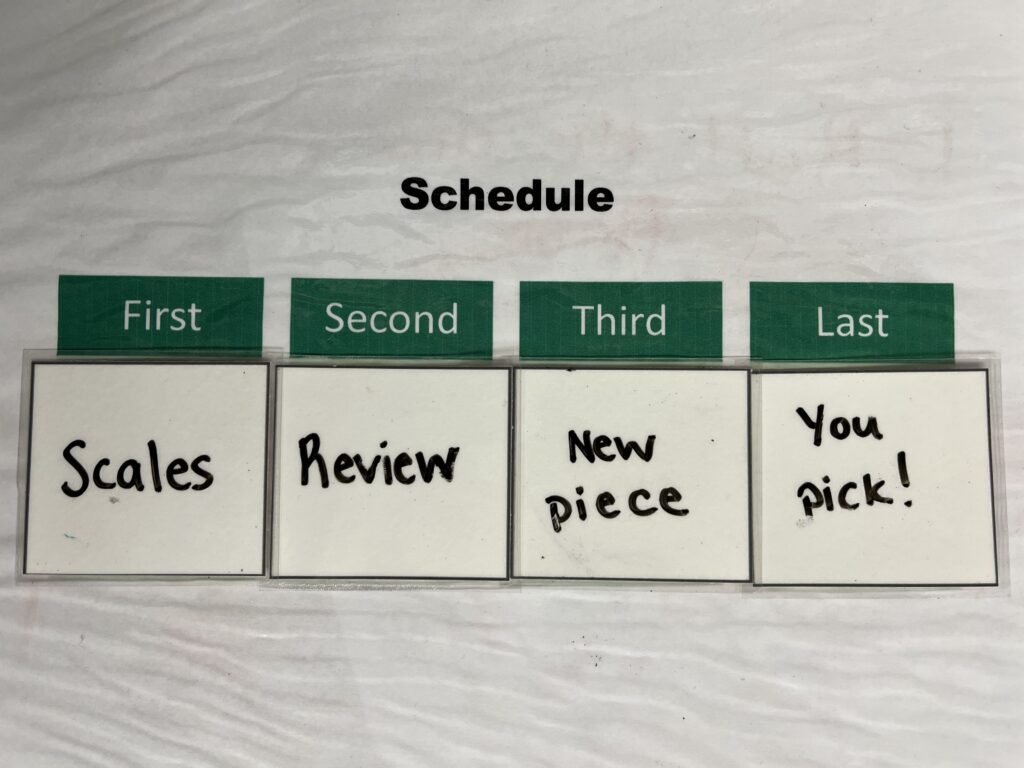
When teaching non-traditional learners, it can be very helpful to have clear expectations so the student knows what is going to happen and can prepare to participate appropriately. One especially important tip is to have a schedule of events for the lesson. This can be specific or vague depending on the students’ needs; the goal is just to have something that will take away the sense that anything could happen next or that the student doesn’t have any control. To make a schedule of events, list specific items, like: C scale, G scale, C arpeggios, G arpeggios, etc., or specific pages or parts of pieces they’re working on. Or, list more general things, like: warm-up, review last week, new technique, festival piece, etc.
If you give the student control over some aspect of the schedule, you are likely to have more buy-in from them. The student could choose the order of the events that you’ve chosen, which warm-up they do, or any number of other elements depending on the individual. Let them pick some of what they will play, whether that is playing preferred songs that they like listening to or allowing them to pick between a set of options. If they have a say in the music they play, students are more likely to be motivated to practice and reach their goals. It could be a good idea to have a system where the student is able to remove or cross off things as they are completed. This can provide a sense of accomplishment and can help keep them engaged and on-task.
Setting up expectations in the form of rules can also be very helpful. Many of the same tips apply here. You can be specific (“play the whole song through without stopping in the middle”) or vague (“use appropriate language”). Involving the students in the process of creating rules can give them a sense of ownership and control. You can get the students input on what rules are most important or if there might be a rule they’d like to propose. This could take the form of a specific rule for you as the teacher too, such as “don’t play the piano when I’m talking, and likewise I won’t play when you’re talking.” These can be reviewed at each lesson, hung on the wall as a constant reminder, or just evoked when they’re needed.
By providing a balance of structure and autonomy, you can position young musicians to reach their maximum potential!
For many students there is a lot of anxiety around making mistakes. Sometimes kids exhibit behaviors because they’re afraid of making mistakes. It can be helpful to have a “mistakes policy” so students feel more comfortable messing up, and this pressure is reduced. You could have a sign hung up in your studio that says how many mistakes are allowed during the lesson. Start with something ridiculous that the student will not reach during the lesson, like 100, and change it each week.
The music therapy team at West Music has compiled a 4-part series with more tips!