Enriching lives through participation in music



Enriching lives through participation in music
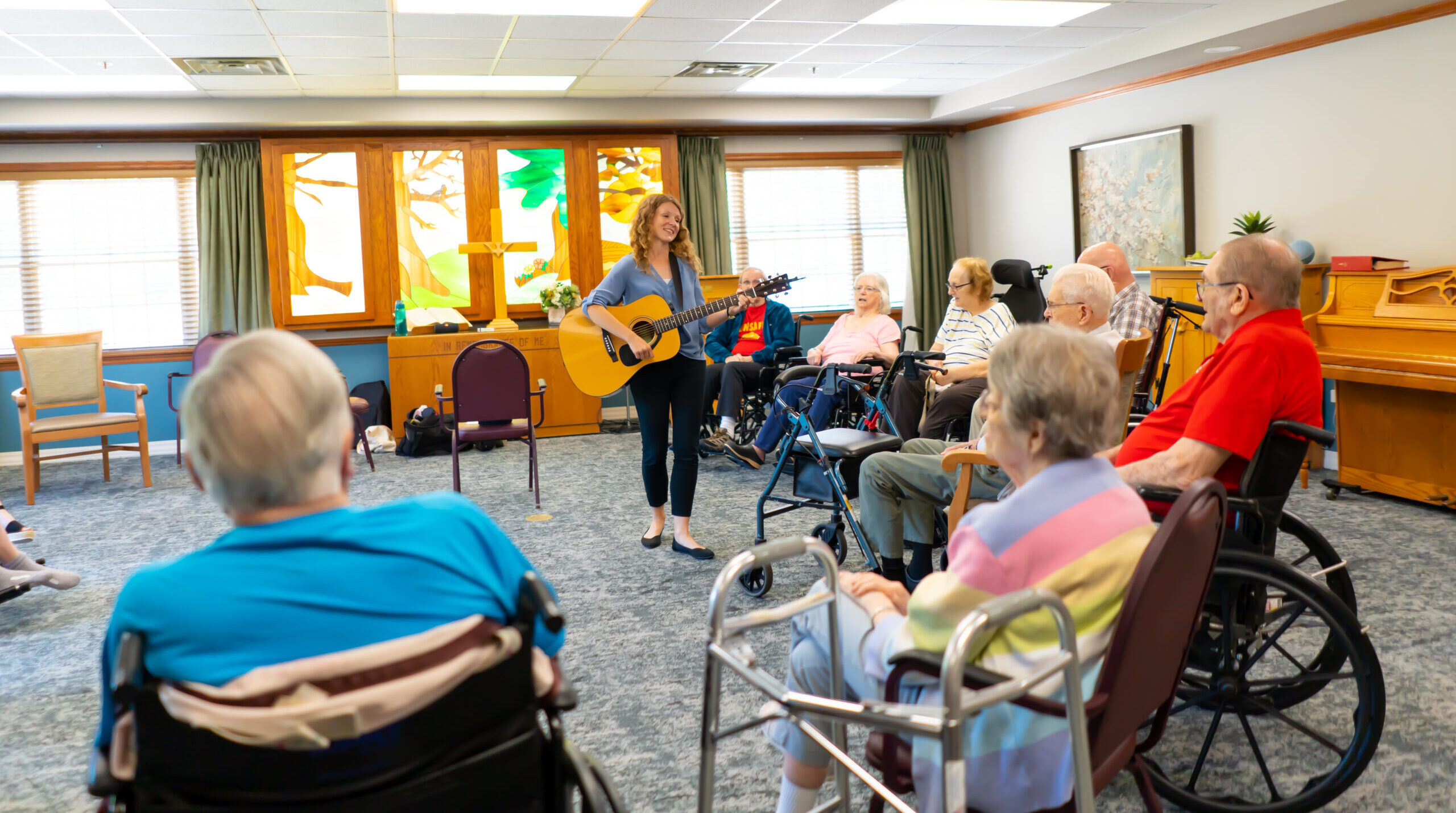
Adaptive lessons can be a wonderful way to give students with disabilities a normalized leisure activity in which they take pride, while also addressing non-musical skills! As music therapists, we are uniquely situated to meet the needs of diverse learners due to our training and experiences. If we rely on our academic and clinical expertise, and add a dose of creativity, we can set our students up for a high level of success, both in lessons and in life. The following are a few tips that I’ve picked up from my time teaching adaptive lessons:
Here’s a perfect opportunity to think outside the box. Just because a student’s learning is focused on one instrument, does not mean that the entirety of the lesson must occur using that instrument. Especially with young students or those with short attention spans, it can be beneficial to vary the way instruction is provided. A few ideas that I have used include:
The individuals with whom we are working often don’t have a lot of chances for control in their lives, but music lessons can be the perfect place to allow for this. Let them pick some of what they will play, whether that is playing preferred songs that they like listening to, or allowing them to pick between a set number of options. If they have a say in the music they play, students are more likely to be motivated to practice, and reach their goals. Students can also have input in how they learn materials. For example, if they are learning to read notes on the staff, they can work with the music therapist to create their own pneumonic devices, pairing words and phrases they like and will remember with “EGBDF”, “GBDFA”, etc.
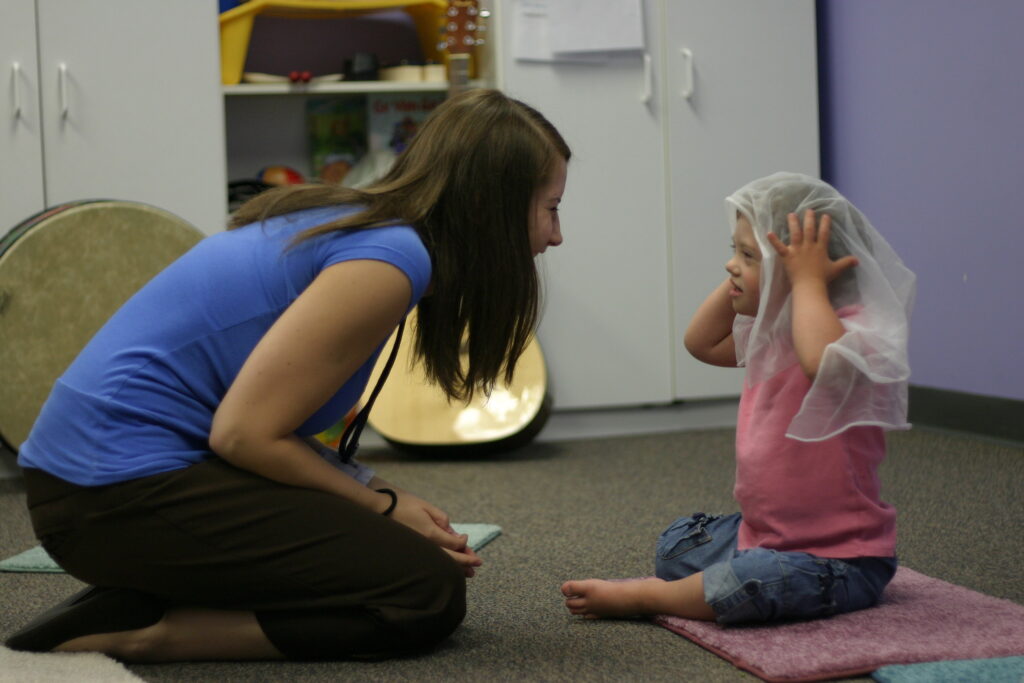
Since every student learns differently, it is critical that we strive to understand our students’ preferences, strengths, and areas that will need additional support. When teaching adaptive lessons, many teachers utilize color-coded materials. For example, we can label keyboard keys with stickers, or open-tune a guitar and label chords as certain colors. However, adaptations should not stop there. It is critical to be an open-minded problem solver and assess what is working well for your student or needs to change. Some may need assistance facilitating communication, some may benefit from physical accommodations, and others may perform best when given sensory intervention to reach a more regulated state.
Adaptive lessons may look different than traditional lessons in some ways, but students can still demonstrate a high level of success. Pay attention to where your student began, and praise the victories that you see, no matter how small they may seem. After all, music can be an absolutely empowering tool and your students should be proud of their successes!